
How to Measure a Hydraulic Cylinder
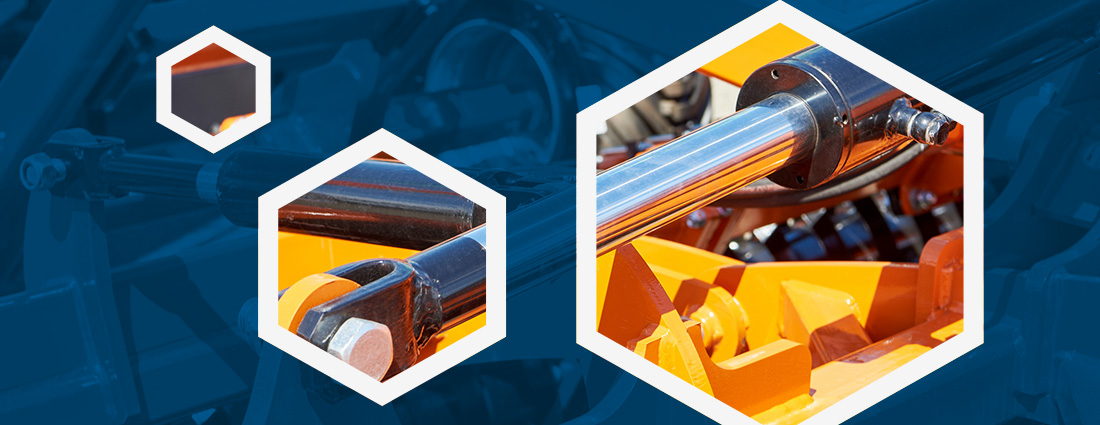
Understanding how to measure your equipment's hydraulic cylinder is crucial when you need to order a replacement. Having the correct hydraulic cylinder dimensions helps ensure your replacement matches your machine's precise requirements for safety and dependable operation.
How Are Hydraulic Cylinders Measured?
Selecting the right hydraulic cylinder is based on the following measurements:
- Piston or bore diameter
- Rod diameter
- Mounting length (extended and retracted)
- Stroke length
Important factors, such as port size and thread type, mounting style and dimensions, and rod-end thread and style, also play a significant role in choosing the right cylinder.
How to Measure Your Hydraulic Cylinder
Use the following steps to measure your hydraulic cylinder and determine the precise specifications you need for a replacement.
1. Identify Your Cylinder
Identifying the type of cylinder you have is the first step. Standard piston-rod cylinders feature an internal piston and a rod that retracts and extends through the end. Here are the most common types and how to differentiate between them:
- Mill-duty cylinder: A mill-duty cylinder has heavy walls and bolted flanges at the cap or head. It has no external tie rods, and its bolts are arranged around its circumference. Mill-duty cylinders are common in steel foundries, mills and presses.
- Welded cylinder: The barrel of a welded cylinder is welded to its end caps. It has no external tie rods and usually features weld beads where the end cap attaches to the barrel. Welded cylinders are common on mobile equipment.
- Tie-rod cylinder: A tie-rod cylinder features long external tie rods with nuts clamping them at the head and cap. Tie-rod cylinders are common in general industrial machinery, material handling applications and robotics.
2. Determine Whether You Have a Single-Acting or Double-Acting Cylinder
Once you identify the type of cylinder you have, you can determine whether it's a single-acting or double-acting cylinder:
- Single-acting cylinder: A single-acting cylinder features one port for hydraulic fluid to enter, forcing the rod in one direction. It retracts either by an internal spring (spring-return) or an external force, such as gravity or the weight of the load (load-return). To identify a single-acting cylinder, look for a single hose attached to a hydraulic port.
- Double-acting cylinder: A double-acting cylinder features two ports — one that allows the hydraulic fluid in and extends the rod, and one that retracts the cylinder. To identify a double-acting cylinder, look for two hydraulic hoses connected to two ports.
It is also important to determine if your cylinder is a single-rod or double-rod cylinder.
- Single-rod: If you have a single-rod cylinder, one rod retracts and extends from one end of the cylinder. Single-rod cylinders are the most common type.
- Double-rod: On a double-rod cylinder, a rod may extend and retract from each side of the cylinder.
3. Gather the Necessary Tools
Obtain the following tools and safety equipment before measuring a hydraulic cylinder:
- Personal protective equipment, such as safety glasses and steel-toe boots
- Calipers or a micrometer to measure bore or rod diameter with precision
- A tape measure
- Thread gauges to verify the sizes of your cylinder's port threads
- A physical or online document to record measurements
4. Check the Cylinder's Part Number or Nameplate Details
The fastest way to determine what type of replacement cylinder you need is to find the part number or nameplate. Some cylinders feature a standard serial number, while others have a smart part number encoded with important specifications. A reputable component manufacturer can help you decipher nameplate information.
If your cylinder's part number or nameplate information is untraceable, you can continue with the following measurement steps.
5. Measure the Diameter of the Bore
Measuring a hydraulic cylinder's bore diameter helps you determine its force output and compatibility with components and seals. You can disassemble your hydraulic cylinder to measure its internal diameter with a dial bore gauge. If you cannot disassemble the cylinder, you can measure its external diameter and subtract the combined thickness of the cylinder walls.
6. Measure the Diameter of the Rod
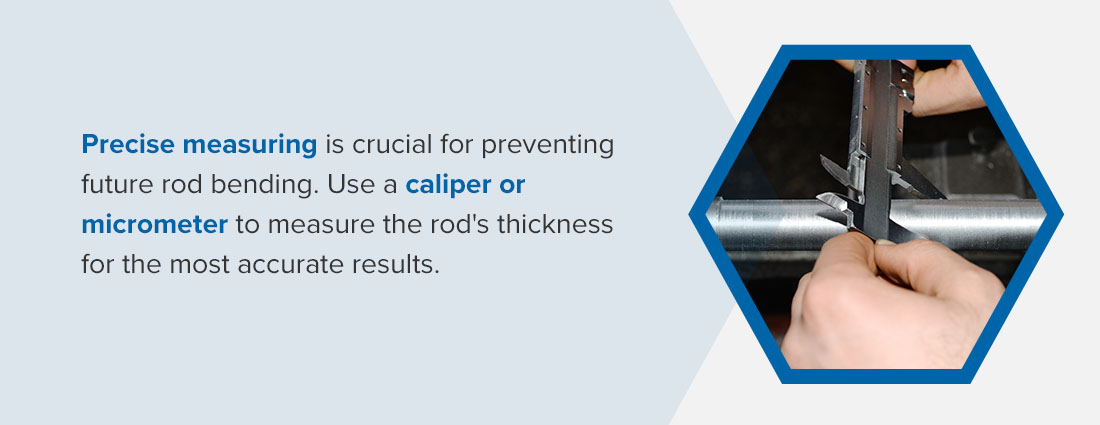
Measuring the cylinder's rod is one of the most important steps. This vital component transfers the necessary force for operation. Precise measuring is crucial for preventing future rod bending. Use a caliper or micrometer to measure the rod's thickness for the most accurate results.
7. Measure the Cylinder's Stroke
A cylinder's stroke indicates the distance it travels during operation, and it is the equivalent of the extended rod length minus its retracted length. It can be measured as the change in exposed rod length or as open minus closed mounting length.
If your cylinder is still installed in a functional machine, you must follow lockout/tagout requirements before measuring the cylinder. If your equipment is nonfunctioning, you must uninstall the cylinder and extend and retract it manually to complete your measurements.
You might need to apply hydraulic pressure to fully extend the rod from the cylinder. Use caution when applying pressure, as oil droplets and atomized spray can extend a significant distance. Wear safety glasses, high-pressure fluid-resistant gloves, and protective clothing.
8. Measure the Cylinder's Retracted and Extended Lengths
Measure between mounting points to determine the cylinder's retracted and extended lengths. You can also use the tape‑mark method to determine stroke. While the rod is in its fully retracted position, mark it with masking tape and then measure from the end of the tape to the cylinder's base mount.
To measure the extended length, measure from the cylinder's base mount and the marked point on the rod while it is fully extended.
9. Determine the Rod-End Thread and Mounting Style
Check your cylinder's threads with calipers or a standard thread gauge, and compare your measurements with the manufacturer's standard sizes. Next, refer to your manufacturer's manual to determine the cylinder's mounting style and dimensions.
10. Determine the Size and Thread Types of the Hose Ports
Evaluate the hose ports to determine their size and thread types. You can find the hose ports where the cylinder connects to the hydraulic lines, usually on the top, bottom or sides of the cylinder. Use a caliper and thread gauge to measure the size and pitch of the thread.
11. Consider Operating Conditions
Keep environmental factors in mind when choosing a seal, wipers, and materials for your cylinder. External factors, such as the following, can impact its operation and longevity:
- Corrosive materials/liquids
- Dust/Dirt Exposure
- Operating temperature
12. Determine the Cylinder's Working Pressure
Determine your hydraulic cylinder's working pressure based on the system in which it operates and your application. The cylinder's rated pressure must meet or exceed the system's maximum, with an appropriate safety factor. Connect a pressure gauge to your cylinder's hydraulic port to measure working pressure. However, for a more accurate reading, match the psi rating on the cylinder's label, or if that is unavailable, the rating of the entire system.
Importance of Accurate Hydraulic Cylinder Measurements
Accurate hydraulic cylinder sizing is important for the following reasons:
- Proper fit: Accurate measurements help ensure your replacement parts fit your equipment properly.
- Equipment health and dependable operation: Proper hydraulic cylinder sizing helps prevent equipment failure and protect your machine's longevity.
- Operational efficiency: Your machine will operate more efficiently with the right-sized cylinder.
- Operator safety: Selecting the right hydraulic cylinder for your equipment protects operators from potential risks and accidents such as uncontrolled equipment movement, sudden pressure releases, and dropped loads.

Restore Your Equipment With a Precision-Manufactured Hydraulic Cylinder
Precise measurements are crucial when it comes to replacing a hydraulic cylinder. York Precision Machining & Hydraulics LLC custom-engineers hydraulic cylinders to meet your exact specifications. As a leading precision hydraulic products producer, we use our vast experience in custom cylinder design and manufacturing to deliver trusted results.
Contact us to learn more about our products and services and how we can help you restore your equipment's function, safety and reliability.
Awards & Certifications

ITAR Registered #M39417
Outstanding Performance

Excellence Presented By Commander
SIBC Member
ACIBC Member

NFPA Member


Made In USA
Last Updated: December 15th, 2019